
Kenya Children of Hope logo

Donations

Contact us

    DSC_7061
    BlogNews

    Kenya celebrates the Year of Jubilee: 50 years of independence…..

    What do these celebrations mean for the children on the streets?’ Are they going to celebrate the fruit of 50 years of independence? I asked myself as I read the report below which basically says what we’ve been saying for a long time at Tumaini Kwa Watoto. Children’s basic need is a family that provides them food, shelter and a sense of belonging. As Kenya celebrates the Year of Jubilee, strengthening the family should be a priority for every Kenyan. We can then all boldly sing the National Anthem: ‘Let one and all arise. In common bond united, build this our nation together. And the glory of Kenya, the fruit of our labour, fill every heart with thanksgiving.’ Our desire this season is that by the time celebrations are over, more children, more families and more communities will overflow with thanksgiving.

    DSC_7439‘Research was conducted in five Rift Valley towns (Eldoret, Kitale, Molo, Nakuru, and Naivasha) in Kenya in 2011 to understand the link between emergencies and the perceived increase of children joining the streets. The findings are based on interviews with 3,138 children, of whom 2,696 were directly connected with the streets. Findings show that food insecurity is one of the biggest factors (59%) that cause children to drop out of school and gravitate toward the streets to find food and earn money…… In Eldoret, a large percentage of children interviewed came from families where one or both parents had died (44%). Displacement as a result of Post-Election Violence was also a major factor with 37% of all children interviewed in the streets being internally displaced (IDPs).

    Children identified food as their biggest need (39%) followed closely by education (34%) and their third biggest unmet need was identified by them as love (24%). More than one in five children

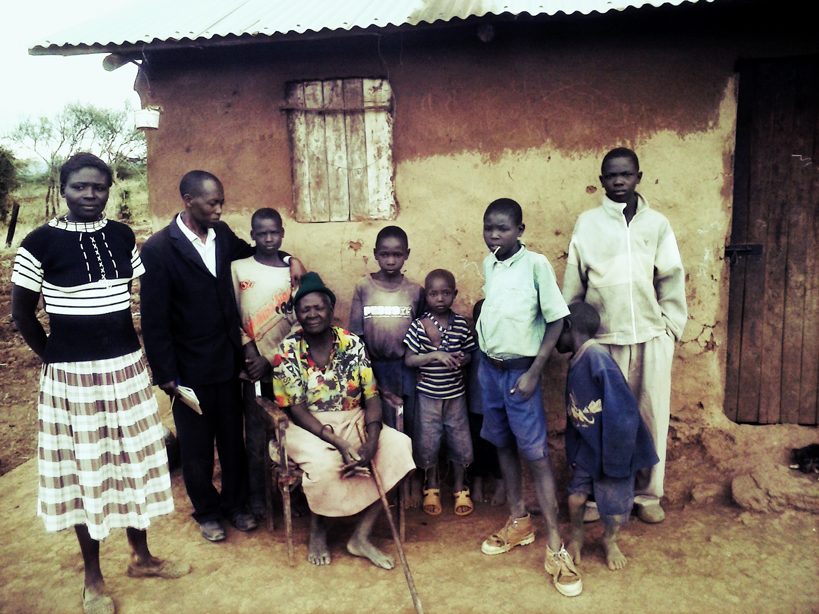
    interviewed had been reunified with their families at least once but were now back on the streets. …….. As a result, family reunification was not a major priority for these children especially teenagers who wanted to live in rented accommodation with their friends. …….. Over half of all IDP children sleeping on the streets wanted to live at home with their families, highlighting the fact that children connected to the streets are not all the same.’ However, coordinated efforts are needed to ensure that a child’s basic need of food security and education are met. HOPELESSNESS is the darkest place you can ever be in. Take away HOPE and you will plunge a child into meaninglessness, throw a society to anarchy, and sentence a generation to life of emptiness. That’s why at Tumaini Kwa Watoto (Children of Hope) we are dealers in hope, lifting children out of hopelessness. We call on all stakeholders including the church (There is a church in very community.) to join hands to make sure that children are enabled to live purposefully. Kenya has a new constitution and a new government. Surely things must change for the most vulnerable members of our great nation, our children, our future. We must find a sustainable solution to the problem of children living and working on the streets – enabling them to live their dreams. Esther & Sarah above are living their dreams.
    Kilonzo,-Mwega-&-Grace-fetured-image
    Blog

    SUCCESS STORIES- A TIME TO CELEBRATE KILONZO

    Kilonzo

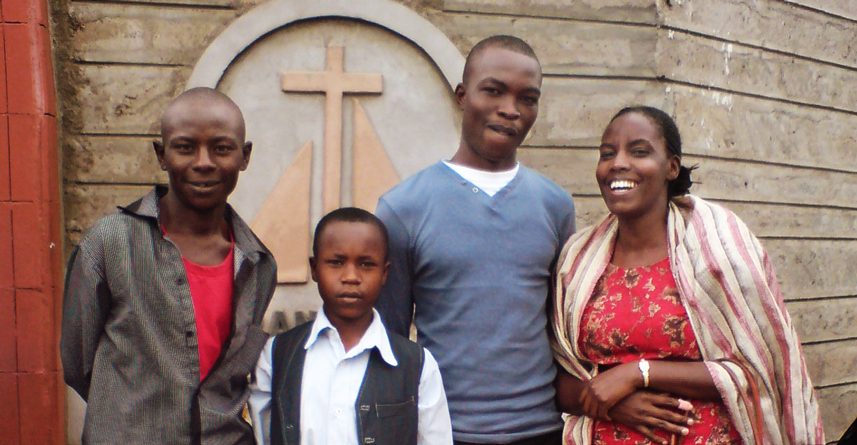
    This was like a dream, but dreams come true.  10years on Grace caught up with Kilonzo a.k.a Simon Kuria – The boy has become a man.  He is now married and works as a matatu (a 14-seater mini bus used for public transport with a yellow stripe) driver in Nairobi.

    As 2013 dawned, Grace was going through her phone directory and noticed Mama Kilonzo’s phone number and decided to call.  An excited lady, Lucy answered.  ‘Sister Grace, where have you been?  The boys, Kilonzo and his brother, Kimeu have been asking about you and mum’.  She shared with Grace how God had shown them his favour.  They now have their own home in Nyahururu to the West of Mt Kenya.  She shared that all her five children were doing well.  Later Grace contacted Kilonzo and invited him to join for her church service on March 17th and later went to Grace’s house for lunch.

    Our investment into this family has borne lasting fruits many years on.  Lucy is now doing business to support her family and putting money aside to send her daughter Angela to high school next when she completes primary school this year.  Peter Kimeu her eldest son is now a farmer and has his own land – he would like to complete high school somehow.

    Lucy is widow whose life changed dramatically when her husband died.  No sooner than he was buried that things turned bad.  He was the sole bread winner and this meant that Lucy had to find a job leaving her children under the care of her in-laws.  The only job she could find was as a waiter in a bar/public drinking place and went home every Saturday night to take food to her children.  That’s how Kilonzo ran away from home one day to go look for his mum because there was no food in the house.  We don’t know how he ended up on the streets of Nairobi from Kaewa in Eastern province.

    We rescued Kilonzo and he stayed with the Williams for a few weeks.  He is a very bright boy who took us to Machakos, 20 miles from Nairobi and connected us with his mum.  He didn’t want to go back to his grandparents without his mum.  Over a period of time, we convinced Lucy that her place was with her children.  In the meantime, we wrote and email asking for someone to sponsor Lucy to start a business and to be with her children.  One family responded and committed to giving £20 a month which went on for a year.  Lucy’s business was doing well but her relationship with her father-in-law was not good. Her mother-in-law had died suddenly the year before. Kilonzo,-Mwega-&-Grace

    Out of the blue, we got a phone from Lucy saying that she had moved her children back to her maternal family.  Her uncle had welcomed them with open arms and given them a piece of land.  They had started growing their own food and settling well in their new location.  Kilonzo and his brother Kimeu opted to remain in Nairobi and find ways of making a living.  Life was not easy and they often came to Tumaini office to updates us on their progress but their survived to tell their stories.  We reconnected with this family and their story is far from over.

    What can we say to these things?  When we invest in people, we make an eternal investment that cannot be quantified.  That’s why we make it our business to see transformation of children, families and communities because everyone matters.  Investing £20 a month into a family, you impact the lives of 2-5 children, get the family back on its feet and in due course allow them to get on with their lives as responsible people in their communities – Changing their lives good with the love of Christ.


    turkana-boy–family-picture
    BlogStory of the Week

    THE DARING BARE FOOTED TURKANA BOY

    turkana-boyErick lokampi is a Turkana boy born 13 years ago at a small village in the plains  of  a locality called Lenget , Kampi ya moto.

    He is a short, dark coloured chocolate boy who is so much outgoing .He is a friendly, warm hearted young man with a potential to achieve much in life at his age.

    The boy would want to go back to school so that he can achieve his dream of becoming a teacher. He left school two years ago at class two to fend for himself .They are six children in their family under the care of the grandmother. Both parents have passed on and in this case, one would not want to imagine what goes on in  the mind of the grandmother when she finds that she cannot meet the needs of her grandchildren. This condition must have made Erick feel like a man who is meant to be a provider ,he has to move out and look for survival ways which could also help him chip in the family kitty and lessen the grandmother’s burden. Just like any other man, he must have heard stories about life in the cities which is painted as glamorous with a lotturkana-boy--and-grnad-mother of opportunities to accommodate everybody. I am imagining how Erick was dying with anticipation to grab those opportunities. I am seeing him trying tooth and nail to look for information which could free him from the sting of poverty. To his amazement, he realizes finances are required to facilitate him from point A to B but he is too young to get an employment which could enable him to earn enough to embark on his journey. He results to use unorthodoxical means to achieve his aspiration. This opens a door for him to look for items which has been left unattended so that he can sell and get money. He finds himself becoming a petty offender not out of choice but circumstances beyond him push him into it.

    The circumstances back home are pathetic. The grandmother sleeps on the floor of her house ,on makeshift bed taking the comfort of an improvised mattress which has been made of sacks .Her presumed mud walled room accommodates even chickens some of which are hatching eggs. The presence of other siblings and scramble for food  might have made him feel out of place because they appear to be a tribe. This and other unforeseen issues must have made Erick feel ,there must be another better life than what is being encountered. Through thick and thin ,he decides to embark on a journey to the unknown hoping to strike it rich. Once away from home,  he finds himself immersed in challenges bigger than his mind can handle at that age .He discovers that the only way to survive is to look for food in the garbage pits and sleep on the hard floor of the veranda of buildings inside a sack to keep warm. This he discovers that it is much more than he had bargained for. The urge for comfort under the roof, warmth in a house,  encouragement and sense of be valued in a home setting rang  a bell in his mind. The idea of children playing in a learning  environment at school triggers his wanting to join the pack and be counted among the number.

    turkana-boy--family-pictureIt dawns on him, East or West home is the best. He also discovers that unrestricted freedom can be very dangerous. He also notes that better the discipline at home with love than what the world gives without mercy He yarns for home and like the prodigal son goes back home down hearted wondering whether he will be accepted back. Once he sets his foot back home,he is received with open hands and lot of jubilation He settles back home with a lot to share with his peers. Rebellion has taught him afew lessons in life he will live to tell .He immediately embarks on his dream which is resumed by joining school.
    equipping parents-1
    BlogStory of the Week

    Resourcing the family- securing our children’s future

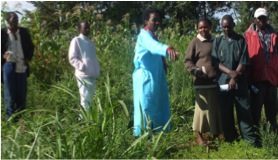
    Care givers include parents and grandparents who take time out to attend our equipping parents’ seminar.  Several issues are addressed including how we are exploring ways of generating income at Bethany Halfway House.  We encourage the caregivers to apply what they’ve seen by using their small pieces of land and work toward food security. Lack of adequate food at home is one of the reasons that push children to the streets.  Every skill they get will make them better parents to give their children a secure future.


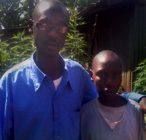
    Augustine (one of our young men) took his position to share his story with the parents during our Equipping Parents Seminar in November 2012.   He appreciated TKW TEAM for the advice he was given over the years that still helps him when things are difficult and urged the parents to give careful attention to the training.  He also said, ‘Dear parents please take care of your children because at times it’s the mistake of the parent that drives a child to the streets’. Who would have known 12 years ago that Augustine would become a voice to the voiceless!  Grace said, ‘Let’s build our children, to build our nation.  As I stood with Augustine, I remembered the 12- hour journey to Western Kenya that we made in November 2000 as we reintegrated Augustine with his family.  Today he stood with me as a testimony of the work of restoration’.

    ’As parents, we are our children’s role models and they reflect our lifestyle positively or negatively’’. This was said during the session on ‘the value of a child’. The parents were urged to give their children values that will help them make choices and decisions.  More is ‘caught than taught’.

    Journey of life was an encouragement as parents received hope for their children and families .The story of how Ruth’s life turned around after she lost her husband and left her people to support Naomi, her mother-in-law was moving. How things changed for Ruth, she got married and had children.  The message was clear, ‘it doesn’t matter what you have gone through in life there is hope’. We are giving these families a voice too.

    These grandmothers never give up….

    It was great to welcome Elizabeth and Joyce, two grandmothers from Molo. They are looking after their grandchildren: Gabriel Kihiyu and Joseph Karanja. They came for training because they want to know, ‘How can we help our grandchildren succeed in life?’ It has not been easy to carry the responsibility of being a guardian.”At some point early in the morning I had to look for Gabriel on the streets,” says Elizabeth while Joyce shared how challenging it has been to take care of Joseph who needs regular medication. Equipping Parents Program has really encouraged them not to give up on their grandsons who have a great future. They carry the big responsibility for these children’s future – how they reflect strong values to live by. Now both Gabriel and Joseph are settling well at home, reports Wambui.

    steve and a child
    BlogStory of the Week

    A NEW START FOR PAUL NGANGA

    A new start: hope, pray and go

    [one_third]story of the week child- 1 Feb [/one_third] [two_third last=last] Years of wasted life – heavy and dirty jacket, hard life, hopelessness, describes Paul’s life on the streets. He looked like an old man and dejected when we first met him on the streets.  We soon discovered that he had been on streets for two and half years, and his appearance reflected it.


    Paul’s story is no different from many other children we’ve meet on the streets:  parents separated, a broken family and a grandmother picks up the pieces.  As much as Paul loved his hard working paternal grandmother who opened her home without parental authority and guidance, he ran away from school to the streets in search for a better life.

    As we met with Paul regularly, slowly but sure, his self-esteem began to grow.  We began to see signs of hope, of change and transformation.  Paul now looked his age, 14 years old.  One day Paul expressed a desire to go back home and plead with his grandmother to receive him back.  Paul said he was ready to face his grandmother and apologize for past mistakes. The team assured him that they would plead his case with his grandmother about his past mistakes.[/two_third] Parents’ separation often causes much damage to many children like Paul, driving them to the streets where their lives and dreams are wasted.  Paul has a dream of becoming a teacher, which cannot be realized on the streets.   We are glad that Tumaini Kwa Watoto team is on the streets and in a position to reach such children like Paul.steve and a child

    Paul’s turning point came when we rescued him from the streets on 14th November 2012 and thus begun a journey of restoration.  We rescued him from the streets and reunited with his grandmother.  When Paul’s mother heard that he had come back, she sent a message requesting Paul to visit her.  Paul went to visit his mother during the school holidays, a few miles from his grandmother’s home.  The visit went well and Paul decided to stay with his mother and go back to school.

    When we visited Paul after seven weeks, we could hardly believe the change that has taken place. Paul’s hopelessness had gone and he has begun to blossom. Paul has gone back to school and the evidence of restoration can be seen all over his life.  He is finally home where he belongs with his mother.


    February 1 2013.


    Mainimage
    BlogNews

    12/04 – THE INTERNATIONAL DAY OF THE STREET CHILDREN

    [one_third]  THE INTERNATIONAL DAY FOR STREET CHILDREN IS CELEBRATED EVERY YEAR ON 12 APRIL.

    THE DAY PROVIDES A PLATFORM FOR THE MILLIONS OF STREET CHILDREN AROUND THE WORLD – AND THEIR CHAMPIONS – TO SPEAK OUT SO THAT THEIR RIGHTS CANNOT BE IGNORED.

    This year we are preparing for the International Day of the Street Children. As a charity involved in work with street children we are part of a global work taking place on each continent, in every country. Recently the 12th of April has been chosen as the Day of the Street Children to bring awareness to the fact that such atrocity does exist. this a day when we speak for those without a voice.

    [/one_third] [two_third last=last] [/two_third]

    The International Day for Street Children was launched in 2011 by the Consortium for Street Children (CSC), the leading international network dedicated to realising the rights of street children worldwide, and is supported by Aviva, the world’s 6th largest insurance group. The day is celebrated by street children, NGOs, policy makers, celebrities, corporates and individuals across the globe.

    Take a look at the infographic showing the numbers behind the day, click here!

    2012

    The Day was celebrated once again on 12th April 2012, when the theme was ‘challenging perceptions’ – encouraging people to question what they think they know about street children. Find out more about what happened in 2012 and challenge your perceptions by watching the video above or reading about some common myths.

    [toggle type=”white” title=”Read more about the celebrations in 2012″ active=””]

    2012

    In 2012 the day was a huge success. Street children, the general public, celebrities, policy makers, charities/NGOs and businesses across the world showed their support for the day in numerous ways.

    Events

    84 events and celebrations were held in 38 countries around the world. Celebrations included: street children art competitions, street parades, conferences, workshops, talent competitions, film screenings, balloon releases, fundraisers, football tournaments and even a successful World Record Breaking shoe shine! Details of many of the events that took place in 2012 can be found on the Showcase page, with pictures in our Gallery.

    Media

    The International Day for Street Children was mentioned in the global media over 580 times.

    National UK coverage included The Guardian, BBC News, The Daily Express and Sky News television, radio and online.

    Articles appeared in 246 regional and local UK newspapers and interviews aired on 186 UK radio stations. 

    Outside of the UK we know of 77 articles appearing in international media spanning 15 different countries: Canada, Chile, China, India, Indonesia, Ireland, Italy, Kenya, Mexico, Pakistan, Philippines, Sierra Leone, Spain, Swaziland and Tanzania.

    See our media coverage page for more in-depth information.

    High Profile Support

    We received lots of high profile support in 2012. Steven Gerrard, Bianca Jagger, UN representatives and a number of UK MP’s and Peers signed our ‘Letter to the Editor’ of the Guardian newspaper.

    Stephen Fry, John Prescott, Danny Cipriani and Alexandra Burke were among the celebrities who tweeted about the day.

    We received statements of support from the Rt.Hon Sir John Major and the Rt Hon. Andrew Mitchell, Secretary of State for International Development.

    Public support

    Over 2,500 people from 89 countries signed our pledge to stand up for the rights of street children worldwide. We delivered the list of signatures at a meeting with the UN High Commission for Human Rights in June.

    [/toggle]

    Key messages

    Across the globe there are large numbers of children surviving on the streets – it’s time we all took action to address this issue.

    Whether they are a runaway from Derby or a street child in Nairobi, the factors that drive children to the streets are similar (and include family breakdown, poverty, and violence).

    One of the  greatest challenges faced by a street child is being recognised and treated as someone with rights.

    We must recognise that a street child has the same potential as any other child, given the opportunity.

    Although street children are vulnerable to the dangers of life on the street, they are also resilient and resourceful.

    Street children see themselves as able to make a positive contribution to society despite often negative attitudes towards them.

    We are calling for governments and society to join together and stand up for the rights of street children all over the world. Being a street child is not a crime.

    Street children adopt many tactics necessary to survive on the streets, such as begging, loitering and rough sleeping.

    Heavy handed treatment by authorities – such as violence and round-ups –  is all too common and must be stamped out.

    Rather than treat them as criminals authorities should understand the reasons for street children’s behaviour and provide support.


    the-streets-of-Nairobi
    Blog

    THE STREET CHILDREN OF NAIROBI

    In 1989, UNICEF estimated 100 million children were growing up on urban streets around the world. 14 years later UNICEF reported: ‘The latest estimates put the numbers of these children as high as 100 million’. And even more recently: ‘The exact number of street children is impossible to quantify, but the figure almost certainly runs into tens of millions across the world. It is likely that the numbers are increasing’. The 100 million figure is still commonly cited, but has no basis in fact . Similarly, it is debatable whether numbers of street children are growing globally or whether it is the awareness of street children within societies which has grown. While there are understandable pressures for policies to be informed by aggregate numbers, estimates of street child populations, even at city levels, are often hotly disputed and can distract rather than inform policy makers.

    It is noted that worldwide today, tens of millions of children are living or working on the streets. Their numbers keep growing due to population growth, urbanization and migration, particularly in the developing world such as Kenya. Children are pushed into living and working on the street by many factors, such as poverty, death of parents, separation/divorce of parents, abandonment, parents living on the streets, mistreatment by parents or relatives, tribal displacement, inadequate food at home, influence by friends, insecurity, getting lost during traveling, being born on the streets, lack of school fees, fear of being reprimanded, corporal punishment, domestic violence, or in search of employment or income among others.

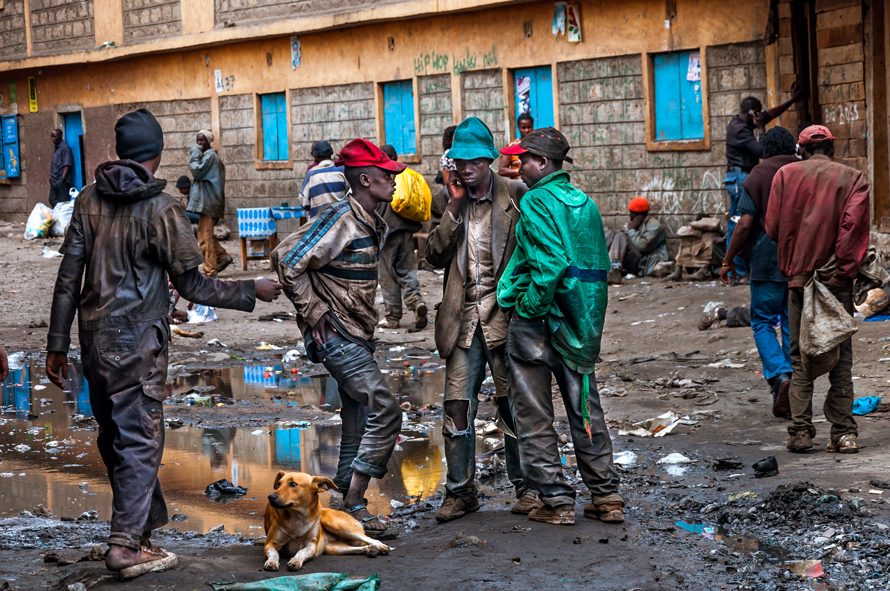
    Once on the streets many other threats await these children. Some of the most pressing challenges street children face include difficulties in maintaining basic health and accessing services, violence (beaten up by the other street children) and abuse, and dangerous working conditions, not feeling any sense of belonging, girls fall into prostitution to make a living, glue sniffing which is one of the many surviving strategies that keep these children resilient to their own feelings and anxiety, and the harsh climatic conditions due to lack of proper shelter and clothing.

    There is an illusion of freedom that these children get by living on the street. It is not a choice to leave their homes for the street but there is a conscious choice to stay on the street. Therefore, much is required to be done to counter the root causes that lead children to live and work on the streets, and to guarantee respect and full realization of the rights enshrined in the Convention on the Rights of the Child.

    The 2018 National Census of Street Families report provides information on the structure, size and distribution of street families in Kenya. The census was the first of its kind to be conducted in the country. The main objective of the census was to create and provide a national data base of the street families population in Kenya. The specific objectives were to establish the magnitude and demographic characteristics of the street families in Kenya; assess the socio-economic and political push and pull factors of street families; generate a databank for street families; and map out existing services, opportunities and potential challenges for street families.

    The census was conducted from 1st to 10th April, 2018 where a total of 46,639 street persons were enumerated . The results show that the majority of the street persons were age 10 to 34 years. The highest concentration of street persons was found in Nairobi, Mombasa, Kisumu, Nakuru and Uasin Gishu Counties in this order. Following the promulgation of the constitution in Kenya in 2010 and devolution of administrative powers to the counties, the results of this census are valuable to managers and planners who make policies at national and county levels.

    The Problem

    of street children is not limited only to the Third World. There are hundreds of thousands of children running away from home and living on the streets of Europe, Canada, USA. That is because the reasons for this phenomenon are not just economical  it is a rather complex issue that urges to become a pandemic problem for many governments in the World. Among the most often given reasons by children are:

    • Child abuse,
    • Neglect,
    • Peer pressure,
    • Sensation-seeking,
    • Other brothers and sisters.

    A study shows that homelessness does not come alone, children reach to substances and drugs:

    • Relief from the pressures of the street
    • Peer Pressure
    • To sleep easily
    • To be able to endure pain, violence, and hunger

    In Africa

    ●  A study in Ethiopia shows that: the Government estimates that 150,000 children live on the streets.  The average age at which children first become involved in street life in Ethiopia is 10.7 years

    ●  Around 1 million children are believed to be on the streets of Egypt, most in Cairo and Alexandria.

    ●  Nigeria– over 95% of the children on the streets of Akwa Ibom State, have been stigmatised as “witches” by pastors and abandoned to live on the streets by their parents.

    ●  South Africa, estimated 10-12000 homeless children. The average age of the respondents to a study on street children was between 13 and 14 years. A similar study also found street children in South Africa to be between 7 and 18 years of age, with the majority between 13 and 16.

    ●  Ghana, a ‘headcount’ of street children and young mothers in the different parts of Accra, the capital of Ghana, has categorised the numbers as 21140 street children, 6000 street babies, 7170 street ‘mothers’ under the age of 20

    ●  Rwanda, more than half of the boys interviewed in a Rwanda study and more than three-quarters of the girls, including 35% of those under ten, admitted they were sexually active; 63% of the boys said they had forced a girl to have sex with them; 93% of the girls reported having been raped.

    ●  Most children living on the street in Lusaka, Zambia are orphans: 22% had lost both parents, 26% had lost their father, and 10% had lost their mother.

    Kenya Children of Hope-Steve from TKW twith a rescued child

    170k

    Indonesia

    1-5m

    Russia

    22k

    Romania

    1.6m

    USA

    1.5m

    China

    1m

    India

    200k-8m

    Brazil

    300k

    Kenya

    1.5m

    Philippines

    135k

    UK

    The Children of Kenya

    Providing Accurate Numbers: One of the most disputed aspects of knowledge on children living and working on the streets of Nairobi is that related to their numbers. What is the magnitude of the problem, quantitatively speaking? There are several differing statistics about the number of street children in Nairobi, Kenya. A study commissioned by the Consortium of Street Children (CSC) brings some staggering numbers:

    • In 1999 it was reported that there were over 50,000 street children in Nairobi, and the government estimated that their numbers grew at 10 % per year
    • In 2001 it was stated that conservative estimates indicated that 300,000 children live and work on the streets in Kenya, with over 50% of them concentrated in and around the capital Nairobi
    • In 2001 another report estimated that there were about 40,000 street children in Kenya, with about half concentrated in Nairobi
    • It was estimated in 2007 that there were 250,000- 300,000 children living and working on the streets across Kenya with, with more than 60,000 of them in Nairobi

    The Invisible Girls Visible: Girls generally tend to be invisible in most studies on street children. The recent study of street families in Nairobi’s central business district commissioned by the NCBDA in 2001 states that boys outnumber girls nine to one. However, according to the findings of a study (Women Educational Researchers of Kenya (WERK) for SNV/Kenya and German Technical Cooperation (GTZ) ) that covered 12 locales in Nairobi District girls constitute on average about 25 percent of the population of children counted in Nairobi District. In Mukuru, Dandora/Maili Saba and Mathare/Eastleigh/Pangani, the proportions are even higher (40%, 31% and 28% respectively).Disaggregation of the findings by age reveals a narrower gender gap in the under-five age bracket. As many as 45 percent of the under-five children were found to be females. While boys often survive on collecting garbage, and help load and unload market goods, earning them up to 80 KSH (US $1) a day, girls are forced to resort to prostitution in order to get clothes or food. According to a 2004 report from The Cradle and The Undugu Society, they earn as little as 10 or 20 KSH ($0.30-0.50) for each client.
    The Age Bracket: The same research reveals the dominance of eleven to fifteen year olds on the streets of Nairobi, constituting over 50 percent of some of the recorded cases. The children below the age of five constitute 7 percent of the total study sample.


     The Ethnic Factor: The study exposed that the majority of the children, regardless of gender, identify themselves as Agikuyu. However, it also suggests that the population of Gikuyus among the street children may have been grossly exaggerated in other studies. While the Gikuyus constitute a significant proportion (46%) of all ethnic groups represented among the street children, the non-Gikuyus in the street children population, put together, are more in number. This notwithstanding, most of the children on the streets can speak the Kikuyu language. Other than Kikuyu, knowledge of Kiswahili was found to be almost universal next the ‘Sheng’ – their own street language.

    Schooling: Overall, only 39.5 percent of the children counted and interviewed for the above mentioned study were attending school while an overwhelming number of children were not participating in any form of formal or non-formal education. Nevertheless a total of 48.5 percent of the girls and 36.5 percent of the boys claimed to be involved in some form of educational programme.  In Korogocho 56.2 percent of the boys claimed to be going to school. The highest number of children who claimed to be going to school fell within the age bracket of 11-15 years translating to 56.71 percent of the total number of respondents.

    Parental Occupation and “Streetism”: Unemployment among parents of the street children is quite high. Almost a quarter of the children claim that their mothers do not work whereas less than a tenth say their fathers do not. Analyses of the parental occupations suggests that these are menial, poorly paying and often highly labour intensive jobs. The implications of this may be many including inability to meet basic family obligations leading to broken homes, high incidences of child neglect and abandonment, absentee parenthood and a tendency to encourage children to obtain employment by any means in order to supplement the family income. This view is supported by the findings that indicate that children are sent out to the streets to earn a living for themselves and even to support other members of the family.

    Most employed mothers are said to be engaged in petty trading while the fathers are reportedly doing more skilled but also unskilled manual work. Some parents also engage in household and domestic work, farming, illicit brewing, and begging for a living. Others do professional / managerial/technical or clerical work, proprietorship, guarding homes/premises, thievery/robbery or engaged in commercial sex work for a living. The percentage of girls with non-working parents is higher than that of boys (6.8% of the female responses and 17.1% of the male responses for the mother’s occupation; 2.8% of the female and 6.9% of the male responses). A number of children do not know anything about their parents’ occupations.

    Children ‘Of’ and ‘On’ the Streets: Many of the children claim that their parents are either deceased or have abandoned them. Abandonment by or death of fathers is found to be more common than abandonment by or death of mothers. The implication is that there are more single mothers than there are fathers. The death of either or both parent and abandonment in turn increases the likelihood of children turning or being turned out to the streets because of limited or no resources for their sustenance within the extended family setting. Children either orphaned or abandoned are found to be among those who have found permanent residence on the streets (approximately 14% of the total sample). Among the children ‘of’ the streets, over 65 percent are male. Most of the children who identified themselves fully with the streets are to be found in Mukuru and City Centre.

    Time spent on the Streets: About 63 percent of the children have been on the streets either on a part time or full time basis for up to 5 years. Over 12 percent have been on the streets for between 6-10 years while another 13 percent can not remember when they had started to frequent the streets.

    Reasons for Streetism: The study we referred to earlier found that children were on the streets for a variety of reasons the major ones being, in order of frequency: to earn money, search for food and/or look for recreation— all described in the literature on street children as “pull” factors. These “pull” factors are symptomatic for children from economically poor families who suffer from lack of adequate attention and care at home as their parents spend most of their time and energy in securing the mere survival. It is also not surprising that “domestic conflicts” and “domestic violence” featured as one key “push” factor for streetism.

    Significantly none of the children cite ‘sex’ as a reason for being on the streets. It is probable that of necessity rather than on their own volition, once on the streets children are introduced into sexual activity either for recreation or money or they are being forced into it and/or raped.

    The Street Sub-Culture: Once on the streets others initiate the children into streetism in order for them to survive. Children’s rights are violated constantly as they are often harassed and exploited and they exploit others in turn. In absence of adult care and guidance they are forced to assume adult responsibilities and take care of themselves and sometimes their siblings and fellow children at a tender age. Out of necessity they have to look for work and they are easy to exploit through meagre or sometimes no pay. They are thrust into a bleak, harsh and depraved environment often fraught with constant and sustained danger in various forms such as:

    • Harassment
    • Violence amongst themselves and towards others
    • Drug taking and trafficking
    • Sexual exploitation accompanied by a high risk of contracting STIs and HIV/AIDS
    • Loneliness and fear
    • Physical and emotional abuse and neglect
    • Starvation
    • Exposure to the elements
    • Early, unplanned and uncontrolled pregnancy and parenthood
    • Poor hygienic and sanitation conditions

    The Public Perceptions: Interviews with the members of the security forces and the public and the children themselves show that children feel that they are unfairly blamed by members of the public for theft, robbery and other infractions of the law. Often they are beaten and harassed for real of imagined misdemeanours. The younger children, especially boys identify the police as among the persons feared most because they continually harass them. Girls fear the older street boys the most because they organise gang rapes sometimes ‘to teach them a lesson” if they decline to have sex with someone, break up with someone or as mere punishment. The girls report that they could be taken advantage of and being gang raped if they merely visit another base and they are known to be unmarried [without a boyfriend protecting them]. Younger children expressed fears of being stolen/abducted and often feel insecure when strangers approach them. The older girls talk of incidents of colleagues who have been sexually molested and subjected to bestiality. These experiences heighten their sense of insecurity and vulnerability.


    prayer-on-the-street-featured-image
    Blog

    NEW YEAR PRAYER LETTER

    [one_half]

    Happy New Year and God’s goodness in 2013!

    Dear praying friends We praise and thank God for 2012 and all the lives that he enabled us to impact. We thank God for our friends and
    partners for their support and encouragement.We thank God for our children. One of our young men, Clement phoned Grace on the New Year’s day just to wish her ‘a happy new year’. Is it that wonderful? Those who know Clement will know that was a very special call. [/one_half]

    [one_half last=last] prayer-on-the-street[/one_half]

    We thank God for 2013, a fresh, New Year with new opportunities for making greater impact in the lives of children and families. Tumaini Kwa Watoto moved to new offices before Christmas holidays just across the road from the old offices. Pray that all utilities and services will operate smoothly soon. Pray that the Lord will establish his work from this new location.

    Luke 2:41-50, 1Chronicles 12:32, Psalm 47:6-7, Hebrews 4:14-16
    Thank God for the two social workers who joined the team this week and pray that they will soon be reintegrated
    into the team and add capacity.

    • Pray for understanding in the team and of the children, families and communities.
    • Pray for the team for deeper walk with God and for His favour and honour. 
    • Pray for our school children and for the Lord’s protection and provision for them throughout the year.

    Deuteronomy 9:1-6; Job 22:28
    Pray for the children on the streets and at JK rehab centre to open their hearts to God’s kingdom and his will for
    their lives. Pray that God will enable us to rescue and reintegrate many children with their families and communities.

    Leviticus 25 – The year of Jubilee: A time to rest and refocus

    • Thank God for Kenya’s 50 years of independence.
    • Pray that real impact of Jubilee celebrations will be felt by all Kenyans, both rich and poor – reflect and refocus.
    • Pray that resources will be released to strengthen the family for children to find secure, safe and restful homes.

    Malachi 4:6; Isaiah 32:18

    • Pray the plans to take equipping parents seminars to the communities that 100-500 parents will be impacted this year.
    • Pray for peaceful general elections to be held in March 2013. Pray for Godly leaders who will advance God’s kingdom purposes. May God’s kingdom rule be felt in Kenya.

    Thank you for your prayers. How can we praise God, pray for you and thank God with you?

    Untitled1
    BlogNewsStory of the WeekUncategorized

    TIME TO GO HOME

    ‘Home before Christmas ’ – 11 boys rescued in November 2012

    20112012015Patrick Mutuma is a 16 years old young adult and hails from Chuka, in Meru which is in Eastern part of Kenya. He has lived in the streets for about 3 years, and as he puts it himself, it wasn’t easy. When we met him he was ready to go home and nothing could deter him from his decision.

    Patrick’s desire is to help his mother with farming as he a waits to do vocational training to help him acquire some basic life skills.

    When we go home, we met Patrick’s mother who narrated to us how Patrick had stressed the family with his truant behavior. However, she kept praying for him to reform wherever he was or at least come back home a changed person. His parents divorced when he was still young so he grew up with his mother. We had a reconciliation meeting with the family in the presence of community members and Patrick was received back with gladness.


    ‘If only I get another chance’, said 12 year old Dennis

    Life has been tough for Dennis since he was born because his mother abandoned him at the tender age of one. His maternal grandparents brought him up, but when life became too hard, he ran Untitled1away to the streets.  On 20th November 2012, we rescued Dennis JK rehab centre and travelled with him to Kinangop an hour’s journey from Nairobi with his grandparents.

    On the same day, Dennis’ mother had abandoned his other 3 siblings in another village and his grandmother had planned to go and rescue them. We also learned that Dennis had been to several children’s homes without settling.  His grandparents were not too pleased to see Dennis.

    As always we pleaded with his grandmother to give Dennis another chance which she eventually did.  We pray that this boy will find rest, be established and give these elderly grandparents strength to give Dennis and his siblings a secure home.

    Simeon 13 years old, the lost brother has been found

    As we approached the house we could see that the door was locked. Disappointment was written all over Simeon’s face as he realized that the warm welcome he had hoped from his sister was not going to be. After inquiring from a neighbor, we found out that Simeon’s sister had started a small business in a nearby town. So we sent a neighbour’s son to call her.

    She came running and started to weep the moment she saw her brother. We spent some time talking with her over some issues.  She readily agree to give her lost brother Simeon a home and promised to talk to her husband to take him back to school next year.

    Peter Swahili 16 years old took time to remember the direction to his home. 5 years ago he left home and couldn’t recognise the buildings and infrastructure that has come up since he left home.  Five years is a long on the streets.

    Peter used to live with his grandmother, Hannah who is a pastoralist.  He left home when he was a very small boy thus, his grandmother could not recognize him. Who is this man? Asked Peter’s grandmother. It took a little introduction for her to recognize her own grandson.  Peter and his grandmother looked at each other.

    The family, like any other typical pastoralist family, has very little or no value for education.  So we talked with Hannah about the importance of education for her grandson and she agreed to take Peter for vocational training. All in all Peter was happy to be back home again before Christmas.

    Ian Kemboi, 14 years – desiregranted. We often pray that God would prepare a safe dwelling place for every child we plan to reintegrate with his family. Over the years, Ian’s father lived an irresponsible life of drinking and gave his children harsh punishment causing Ian to regularly run to the streets which made it very difficult for him to settle.

    When we took him back to his home in Kitale, we found a transformed father who had committed his life to Christ and now attends church with his family. With hope in his heart, he received his son and is willing to gradually work out their father-son relationship. Ian on the other hand asked for forgiveness for leaving home without warning and causing his family much pain.  We thank God for Ian’s parents who love him in spite of what has done.  They are ready to support him and help him settle at home.

    “Taking me home would be the best Christmas gift”, said 14 years old Anthony Mabonga

    IMG_20121121_094941

    Ululation filled the air at Moi’s Bridge when Anthony entered their homestead and began calling his grandmother in his native luhya language.”Kukhu Kukhu!” His grandmother’s voice was heard in one of the huts. We followed as Anthony led us, in seconds they were locked in tight hugs and there was more ululation. Anthony was under the care of his parents who lived near Kenya-Tanzania border. He had been asked to do some house chores but went to play and forgot.  He was afraid of being punished and ran to the streets where we met him a few months ago.

    Anthony’s family was very happy to receive him.  He will enjoy Christmas with his family as he had desired while preparing to join class 5 in 2013.

    Looking for a place to belong is 13 years old Dennis Kiarie driven to the streets by his parents’ separation, ‘Finally I am home’ said 14 year old Joseph, whose only hope is his uncle’s family as well as Wycliffe Nyange, Titus Mosota, Henry Nyambuto, boys who come from Kisi in western Kenya to just get a glimpse of the city’s tall buildings.   All reconnected with their families.

    Having rescued these boys, the real task of restoring them and their families has just begun.  We however, rejoice that their desire to be ‘home for Christmas’ has been granted.  Rejoice with that eleven (11) children have been rescued and reintegrated with their families – the place where they belong!

    Tumaini Mass rescue


    Uncategorized

    Post with custom slideshow, full width layout

    Lorem ipsum dolor sit amet, consectetur adipiscing elit. Nulla convallis egestas rhoncus. Donec facilisis fermentum sem, ac viverra ante luctus vel. Donec vel mauris quam. Aliquam pellentesque pellentesque turpis, ut bibendum sapien sollicitudin nec. Pellentesque posuere ornare placerat. Suspendisse potenti. Quisque massa tortor, tristique non tristique at, luctus sed massa. Donec libero eros, mollis ac fringilla eu, vestibulum sed lorem. Aenean aliquet tempor purus, sit amet ultricies neque bibendum venenatis. Suspendisse pulvinar massa sed odio semper mattis. Pellentesque vel nunc arcu, id rhoncus magna. Maecenas quis tempus ligula. Nunc ac tortor diam. Phasellus tincidunt rutrum diam, eget elementum lorem sagittis eget.

    Integer faucibus magna vitae augue suscipit a varius sem scelerisque. Nunc scelerisque tempus nunc in euismod. In sagittis congue sodales. Cras sit amet est nibh. Suspendisse eget ligula in nulla iaculis interdum nec a odio. Pellentesque habitant morbi tristique senectus et netus et malesuada fames ac turpis egestas. Cras massa odio, facilisis tincidunt blandit semper, lacinia semper dui. Donec viverra eros quis urna congue facilisis. Vivamus convallis imperdiet porta. Aliquam a nisi risus, vitae faucibus sem.
    [clear]

    [one_half]

    [/one_half]
    [one_half last=last]
    [clear]
    Aliquam erat volutpat. Duis id quam nec justo eleifend gravida. In fermentum ornare mauris at ornare. Sed a suscipit nibh. Nullam aliquam vehicula nibh et condimentum. Aliquam dictum, lorem eget cursus iaculis, lectus erat egestas dolor, at cursus felis tellus sit amet turpis. Sed id neque leo, ut scelerisque mi. Pellentesque fermentum ipsum nec nisl varius aliquet. Aliquam scelerisque cursus turpis a cursus. Fusce pharetra nisi eu ante dapibus a ullamcorper nisi tristique. Etiam sed mi ut leo euismod adipiscing. [/one_half]

    Integer mauris tortor, laoreet ut elementum non, elementum a velit. Fusce vel diam nec justo mollis dignissim vitae eget est. Curabitur ligula nisl, cursus quis tincidunt vitae, fermentum ut erat. Aenean at ligula at quam vulputate pellentesque ac in ipsum. Quisque pharetra hendrerit est at placerat. Praesent euismod rutrum pulvinar. Suspendisse lorem orci, adipiscing a vulputate vel, dictum ut justo. Pellentesque sit amet purus eu justo rutrum iaculis. Suspendisse vel consectetur arcu. Aliquam dolor velit, feugiat non commodo in, gravida pharetra eros.