Celebrate with us. 1000 children off the streets and back with their families!
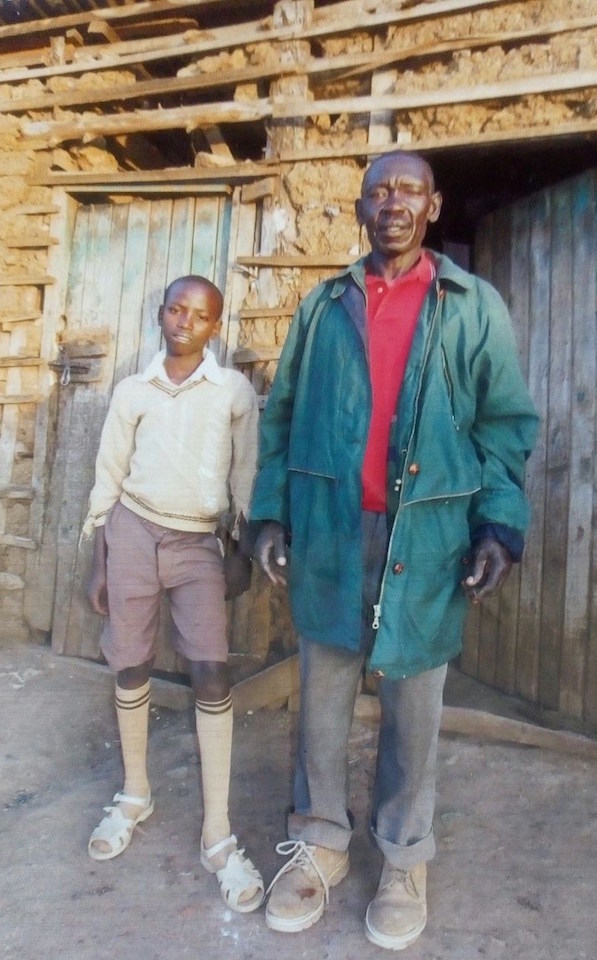
Tumaini’s number one priority is getting the children back home and back to school. Every child living or loitering on the streets has a reason for being there and not by chance. TKW team is alert whenever we spot a child walking on the streets. James had two reasons for being on the streets. His parents were separated and he didn’t have a place to call home. His teachers had also forced him to repeat class 7 than joining class 8. He said: “When we get home please remember to tell my dad and my grandmother I want to go to class 8.
James’ grandmother welcomed us home. After a lengthy introduction, she accompanied us to James’ school. TKW team pleaded his case and he was allowed to join class 8 as he had requested. He was also attached to a school counselor for ongoing guidance.
Fast forward…..James is slowly adjusting to life at home. He is running errands for the family as he reconnects with his younger siblings. He has joined the young people’ group in church where they practice dancing. He is also preparing for KCPE in November 2016 and his teachers are encouraging him to work hard.
We thank our friends and partners for empowering TKW team to walk 1000 children back home to their families.
Sad, confused, hurt, and numb:- There are many reasons why children wind up on the streets but no reason is good. Promises of security, sense of belonging, desperation and many more pave the road to the streets. In Alex’s case it was all of those. When he was met by the TKW team, he spoke of his life before joining the streets as a time of suffering, abusive and discrimination.
“When I needed a mother, she was not there to talk to me about life. I started running away at the age of 9. I felt like my mother didn’t want me around. She never showed me love and affection so I turned to the streets.” My mum once told me “you will have to go look for your irresponsible father or else you become like him one day…we cannot live in the same house. It is either you go or I will go…” she followed through with what she said. I was at school when I came home and the house was empty. She had relocated without me. My whole life crumbled and nothing else mattered anymore. Our family was shattered!!!” He still had his school uniform several months later on the streets since his mother’s disappearance.
As the TKW team related with him, Alex kept asking them why his mother moved far away, and it made his tears flow. However, he was ready to go back to his extended family and he agreed to take the team to his grandparents place. However, the most unjust part is that the journey to Alex’s grandparents’ home began on the streets.
“I knew my grandparent loved me but had no way of travelling there and thus joined the streets as one who had no family. Meeting TKW team helped Alex get his life together. They convinced him that he was worthy to live life as a productive member of society and he was not a bad person. Alex was ready to go home to his grandparent. After months on the streets, his heart had begun the journey of healing. He always looked forward to a time he could give a real smile.
Alex was reunited with his grandfather who was pleased to see his grandson. His grandmother had passed on several weeks earlier.
“We have been trying to trace Alex since the day we were informed that the mother had relocated leaving her son behind and today we are grateful,” Alex’s grandfather concluded
For Alex, leaving the streets was not easy and life at home isn’t easy either. But one thing is sure: He has a second chance. His dream is that he will have a new story for his life, continue with his education and pursue his dream. His current family is needy and may not be able to provide for his basic needs but he has a roof on his head.
Alex needs a new school uniform which will cost 2000Kshs, other school requirements of 4000Kshs, basic needs every other month of 3000Kshs. Follow up visits to Alex to monitor his progress 6000Kshs/£50 per visit.
TKW Team is encouraged that Alex and 20 others are off the streets and back home with their families in February 2016. Kindly partner with us bring healing to Alex and help him to start dreaming again
[one_third] THE INTERNATIONAL DAY FOR STREET CHILDREN IS CELEBRATED EVERY YEAR ON 12 APRIL.
THE DAY PROVIDES A PLATFORM FOR THE MILLIONS OF STREET CHILDREN AROUND THE WORLD – AND THEIR CHAMPIONS – TO SPEAK OUT SO THAT THEIR RIGHTS CANNOT BE IGNORED.
This year we are preparing for the International Day of the Street Children. As a charity involved in work with street children we are part of a global work taking place on each continent, in every country. Recently the 12th of April has been chosen as the Day of the Street Children to bring awareness to the fact that such atrocity does exist. this a day when we speak for those without a voice.
[/one_third]
[two_third last=last] [/two_third]
The International Day for Street Children was launched in 2011 by the Consortium for Street Children (CSC), the leading international network dedicated to realising the rights of street children worldwide, and is supported by Aviva, the world’s 6th largest insurance group. The day is celebrated by street children, NGOs, policy makers, celebrities, corporates and individuals across the globe.
Take a look at the infographic showing the numbers behind the day, clickhere!
2012
The Day was celebrated once again on 12th April 2012, when the theme was ‘challenging perceptions’ – encouraging people to question what they think they know about street children. Find out more about what happened in 2012 and challenge your perceptions by watching the video above or reading about some common myths.
[toggle type=”white” title=”Read more about the celebrations in 2012″ active=””]
2012
In 2012 the day was a huge success. Street children, the general public, celebrities, policy makers, charities/NGOs and businesses across the world showed their support for the day in numerous ways.
Events
84 events and celebrations were held in 38 countries around the world. Celebrations included: street children art competitions, street parades, conferences, workshops, talent competitions, film screenings, balloon releases, fundraisers, football tournaments and even a successful World Record Breaking shoe shine! Details of many of the events that took place in 2012 can be found on the Showcase page, with pictures in our Gallery.
Media
The International Day for Street Children was mentioned in the global media over 580 times.
Articles appeared in 246 regional and local UK newspapers and interviews aired on 186 UK radio stations.
Outside of the UK we know of 77 articles appearing in international media spanning 15 different countries: Canada, Chile, China, India, Indonesia, Ireland, Italy, Kenya, Mexico, Pakistan, Philippines, Sierra Leone, Spain, Swaziland and Tanzania.
See our media coverage page for more in-depth information.
High Profile Support
We received lots of high profile support in 2012. Steven Gerrard, Bianca Jagger, UN representatives and a number of UK MP’s and Peers signed our ‘Letter to the Editor’ of the Guardian newspaper.
We received statements of support from the Rt.Hon Sir John Major and the Rt Hon. Andrew Mitchell, Secretary of State for International Development.
Public support
Over 2,500 people from 89 countries signed our pledge to stand up for the rights of street children worldwide. We delivered the list of signatures at a meeting with the UN High Commission for Human Rights in June.
[/toggle]
Key messages
Across the globe there are large numbers of children surviving on the streets – it’s time we all took action to address this issue.
Whether they are a runaway from Derby or a street child in Nairobi, the factors that drive children to the streets are similar (and include family breakdown, poverty, and violence).
One of the greatest challenges faced by a street child is being recognised and treated as someone with rights.
We must recognise that a street child has the same potential as any other child, given the opportunity.
Although street children are vulnerable to the dangers of life on the street, they are also resilient and resourceful.
Street children see themselves as able to make a positive contribution to society despite often negative attitudes towards them.
We are calling for governments and society to join together and stand up for the rights of street children all over the world. Being a street child is not a crime.
Street children adopt many tactics necessary to survive on the streets, such as begging, loitering and rough sleeping.
Heavy handed treatment by authorities – such as violence and round-ups – is all too common and must be stamped out.
Rather than treat them as criminals authorities should understand the reasons for street children’s behaviour and provide support.
In 1989, UNICEF estimated 100 million children were growing up on urban streets around the world. 14 years later UNICEF reported: ‘The latest estimates put the numbers of these children as high as 100 million’. And even more recently: ‘The exact number of street children is impossible to quantify, but the figure almost certainly runs into tens of millions across the world. It is likely that the numbers are increasing’. The 100 million figure is still commonly cited, but has no basis in fact . Similarly, it is debatable whether numbers of street children are growing globally or whether it is the awareness of street children within societies which has grown. While there are understandable pressures for policies to be informed by aggregate numbers, estimates of street child populations, even at city levels, are often hotly disputed and can distract rather than inform policy makers.
It is noted that worldwide today, tens of millions of children are living or working on the streets. Their numbers keep growing due to population growth, urbanization and migration, particularly in the developing world such as Kenya. Children are pushed into living and working on the street by many factors, such as poverty, death of parents, separation/divorce of parents, abandonment, parents living on the streets, mistreatment by parents or relatives, tribal displacement, inadequate food at home, influence by friends, insecurity, getting lost during traveling, being born on the streets, lack of school fees, fear of being reprimanded, corporal punishment, domestic violence, or in search of employment or income among others.
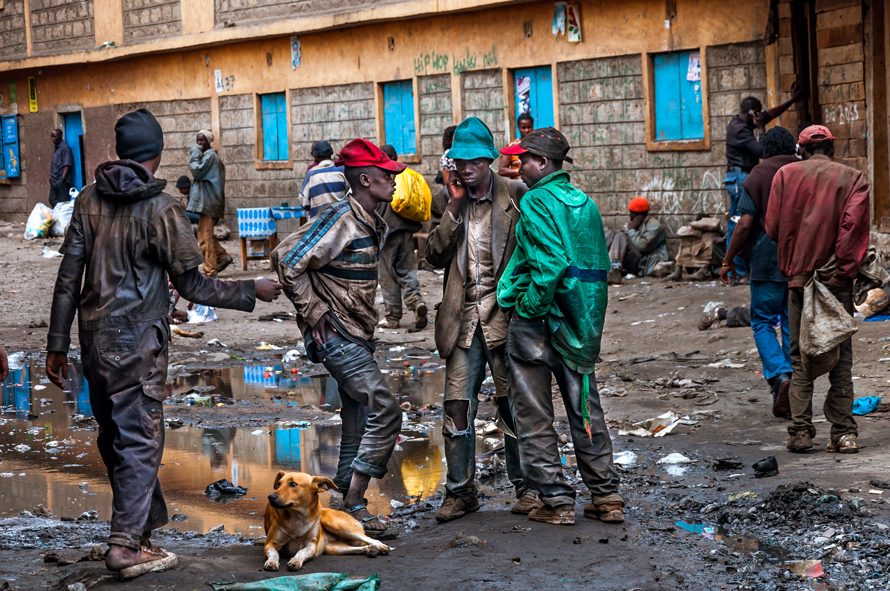
Once on the streets many other threats await these children. Some of the most pressing challenges street children face include difficulties in maintaining basic health and accessing services, violence (beaten up by the other street children) and abuse, and dangerous working conditions, not feeling any sense of belonging, girls fall into prostitution to make a living, glue sniffing which is one of the many surviving strategies that keep these children resilient to their own feelings and anxiety, and the harsh climatic conditions due to lack of proper shelter and clothing.
There is an illusion of freedom that these children get by living on the street. It is not a choice to leave their homes for the street but there is a conscious choice to stay on the street. Therefore, much is required to be done to counter the root causes that lead children to live and work on the streets, and to guarantee respect and full realization of the rights enshrined in the Convention on the Rights of the Child.
The 2018 National Census of Street Families report provides information on the structure, size and distribution of street families in Kenya. The census was the first of its kind to be conducted in the country. The main objective of the census was to create and provide a national data base of the street families population in Kenya. The specific objectives were to establish the magnitude and demographic characteristics of the street families in Kenya; assess the socio-economic and political push and pull factors of street families; generate a databank for street families; and map out existing services, opportunities and potential challenges for street families.
The census was conducted from 1st to 10th April, 2018 where a total of 46,639 street persons were enumerated . The results show that the majority of the street persons were age 10 to 34 years. The highest concentration of street persons was found in Nairobi, Mombasa, Kisumu, Nakuru and Uasin Gishu Counties in this order. Following the promulgation of the constitution in Kenya in 2010 and devolution of administrative powers to the counties, the results of this census are valuable to managers and planners who make policies at national and county levels.
The Problem
of street children is not limited only to the Third World. There are hundreds of thousands of children running away from home and living on the streets of Europe, Canada, USA. That is because the reasons for this phenomenon are not just economical it is a rather complex issue that urges to become a pandemic problem for many governments in the World. Among the most often given reasons by children are:
Child abuse,
Neglect,
Peer pressure,
Sensation-seeking,
Other brothers and sisters.
A study shows that homelessness does not come alone, children reach to substances and drugs:
Relief from the pressures of the street
Peer Pressure
To sleep easily
To be able to endure pain, violence, and hunger
In Africa
● A study in Ethiopia shows that: the Government estimates that 150,000 children live on the streets. The average age at which children first become involved in street life in Ethiopia is 10.7 years
● Around 1 million children are believed to be on the streets of Egypt, most in Cairo and Alexandria.
● Nigeria– over 95% of the children on the streets of Akwa Ibom State, have been stigmatised as “witches” by pastors and abandoned to live on the streets by their parents.
● South Africa, estimated 10-12000 homeless children. The average age of the respondents to a study on street children was between 13 and 14 years. A similar study also found street children in South Africa to be between 7 and 18 years of age, with the majority between 13 and 16.
● Ghana, a ‘headcount’ of street children and young mothers in the different parts of Accra, the capital of Ghana, has categorised the numbers as 21140 street children, 6000 street babies, 7170 street ‘mothers’ under the age of 20
● Rwanda, more than half of the boys interviewed in a Rwanda study and more than three-quarters of the girls, including 35% of those under ten, admitted they were sexually active; 63% of the boys said they had forced a girl to have sex with them; 93% of the girls reported having been raped.
● Most children living on the street in Lusaka, Zambia are orphans: 22% had lost both parents, 26% had lost their father, and 10% had lost their mother.
170k
Indonesia
1-5m
Russia
22k
Romania
1.6m
USA
1.5m
China
1m
India
200k-8m
Brazil
300k
Kenya
1.5m
Philippines
135k
UK
The Children of Kenya
Providing Accurate Numbers: One of the most disputed aspects of knowledge on children living and working on the streets of Nairobi is that related to their numbers. What is the magnitude of the problem, quantitatively speaking? There are several differing statistics about the number of street children in Nairobi, Kenya. A study commissioned by the Consortium of Street Children (CSC) brings some staggering numbers:
In 1999 it was reported that there were over 50,000 street children in Nairobi, and the government estimated that their numbers grew at 10 % per year
In 2001 it was stated that conservative estimates indicated that 300,000 children live and work on the streets in Kenya, with over 50% of them concentrated in and around the capital Nairobi
In 2001 another report estimated that there were about 40,000 street children in Kenya, with about half concentrated in Nairobi
It was estimated in 2007 that there were 250,000- 300,000 children living and working on the streets across Kenya with, with more than 60,000 of them in Nairobi
The Invisible Girls Visible: Girls generally tend to be invisible in most studies on street children. The recent study of street families in Nairobi’s central business district commissioned by the NCBDA in 2001 states that boys outnumber girls nine to one. However, according to the findings of a study (Women Educational Researchers of Kenya (WERK) for SNV/Kenya and German Technical Cooperation (GTZ) ) that covered 12 locales in Nairobi District girls constitute on average about 25 percent of the population of children counted in Nairobi District. In Mukuru, Dandora/Maili Saba and Mathare/Eastleigh/Pangani, the proportions are even higher (40%, 31% and 28% respectively).Disaggregation of the findings by age reveals a narrower gender gap in the under-five age bracket. As many as 45 percent of the under-five children were found to be females. While boys often survive on collecting garbage, and help load and unload market goods, earning them up to 80 KSH (US $1) a day, girls are forced to resort to prostitution in order to get clothes or food. According to a 2004 report from The Cradle and The Undugu Society, they earn as little as 10 or 20 KSH ($0.30-0.50) for each client. The Age Bracket: The same research reveals the dominance of eleven to fifteen year olds on the streets of Nairobi, constituting over 50 percent of some of the recorded cases. The children below the age of five constitute 7 percent of the total study sample.
The Ethnic Factor: The study exposed that the majority of the children, regardless of gender, identify themselves as Agikuyu. However, it also suggests that the population of Gikuyus among the street children may have been grossly exaggerated in other studies. While the Gikuyus constitute a significant proportion (46%) of all ethnic groups represented among the street children, the non-Gikuyus in the street children population, put together, are more in number. This notwithstanding, most of the children on the streets can speak the Kikuyu language. Other than Kikuyu, knowledge of Kiswahili was found to be almost universal next the ‘Sheng’ – their own street language.
Schooling: Overall, only 39.5 percent of the children counted and interviewed for the above mentioned study were attending school while an overwhelming number of children were not participating in any form of formal or non-formal education. Nevertheless a total of 48.5 percent of the girls and 36.5 percent of the boys claimed to be involved in some form of educational programme. In Korogocho 56.2 percent of the boys claimed to be going to school. The highest number of children who claimed to be going to school fell within the age bracket of 11-15 years translating to 56.71 percent of the total number of respondents.
Parental Occupation and “Streetism”: Unemployment among parents of the street children is quite high. Almost a quarter of the children claim that their mothers do not work whereas less than a tenth say their fathers do not. Analyses of the parental occupations suggests that these are menial, poorly paying and often highly labour intensive jobs. The implications of this may be many including inability to meet basic family obligations leading to broken homes, high incidences of child neglect and abandonment, absentee parenthood and a tendency to encourage children to obtain employment by any means in order to supplement the family income. This view is supported by the findings that indicate that children are sent out to the streets to earn a living for themselves and even to support other members of the family.
Most employed mothers are said to be engaged in petty trading while the fathers are reportedly doing more skilled but also unskilled manual work. Some parents also engage in household and domestic work, farming, illicit brewing, and begging for a living. Others do professional / managerial/technical or clerical work, proprietorship, guarding homes/premises, thievery/robbery or engaged in commercial sex work for a living. The percentage of girls with non-working parents is higher than that of boys (6.8% of the female responses and 17.1% of the male responses for the mother’s occupation; 2.8% of the female and 6.9% of the male responses). A number of children do not know anything about their parents’ occupations.
Children ‘Of’ and ‘On’ the Streets: Many of the children claim that their parents are either deceased or have abandoned them. Abandonment by or death of fathers is found to be more common than abandonment by or death of mothers. The implication is that there are more single mothers than there are fathers. The death of either or both parent and abandonment in turn increases the likelihood of children turning or being turned out to the streets because of limited or no resources for their sustenance within the extended family setting. Children either orphaned or abandoned are found to be among those who have found permanent residence on the streets (approximately 14% of the total sample). Among the children ‘of’ the streets, over 65 percent are male. Most of the children who identified themselves fully with the streets are to be found in Mukuru and City Centre.
Time spent on the Streets: About 63 percent of the children have been on the streets either on a part time or full time basis for up to 5 years. Over 12 percent have been on the streets for between 6-10 years while another 13 percent can not remember when they had started to frequent the streets.
Reasons for Streetism: The study we referred to earlier found that children were on the streets for a variety of reasons the major ones being, in order of frequency: to earn money, search for food and/or look for recreation— all described in the literature on street children as “pull” factors. These “pull” factors are symptomatic for children from economically poor families who suffer from lack of adequate attention and care at home as their parents spend most of their time and energy in securing the mere survival. It is also not surprising that “domestic conflicts” and “domestic violence” featured as one key “push” factor for streetism.
Significantly none of the children cite ‘sex’ as a reason for being on the streets. It is probable that of necessity rather than on their own volition, once on the streets children are introduced into sexual activity either for recreation or money or they are being forced into it and/or raped.
The Street Sub-Culture: Once on the streets others initiate the children into streetism in order for them to survive. Children’s rights are violated constantly as they are often harassed and exploited and they exploit others in turn. In absence of adult care and guidance they are forced to assume adult responsibilities and take care of themselves and sometimes their siblings and fellow children at a tender age. Out of necessity they have to look for work and they are easy to exploit through meagre or sometimes no pay. They are thrust into a bleak, harsh and depraved environment often fraught with constant and sustained danger in various forms such as:
Harassment
Violence amongst themselves and towards others
Drug taking and trafficking
Sexual exploitation accompanied by a high risk of contracting STIs and HIV/AIDS
Loneliness and fear
Physical and emotional abuse and neglect
Starvation
Exposure to the elements
Early, unplanned and uncontrolled pregnancy and parenthood
Poor hygienic and sanitation conditions
The Public Perceptions: Interviews with the members of the security forces and the public and the children themselves show that children feel that they are unfairly blamed by members of the public for theft, robbery and other infractions of the law. Often they are beaten and harassed for real of imagined misdemeanours. The younger children, especially boys identify the police as among the persons feared most because they continually harass them. Girls fear the older street boys the most because they organise gang rapes sometimes ‘to teach them a lesson” if they decline to have sex with someone, break up with someone or as mere punishment. The girls report that they could be taken advantage of and being gang raped if they merely visit another base and they are known to be unmarried [without a boyfriend protecting them]. Younger children expressed fears of being stolen/abducted and often feel insecure when strangers approach them. The older girls talk of incidents of colleagues who have been sexually molested and subjected to bestiality. These experiences heighten their sense of insecurity and vulnerability.




 Tumaini’s number one priority is getting the children back home and back to school. Every child living or loitering on the streets has a reason for being there and not by chance. TKW team is alert whenever we spot a child walking on the streets. James had two reasons for being on the streets. His parents were separated and he didn’t have a place to call home. His teachers had also forced him to repeat class 7 than joining class 8. He said: “When we get home please remember to tell my dad and my grandmother I want to go to class 8.
 Fast forward…..James is slowly adjusting to life at home. He is running errands for the family as he reconnects with his younger siblings. He has joined the young people’ group in church where they practice dancing. He is also preparing for KCPE in November 2016 and his teachers are encouraging him to work hard.
 Alex Muturi Aged: 12 year old asks.